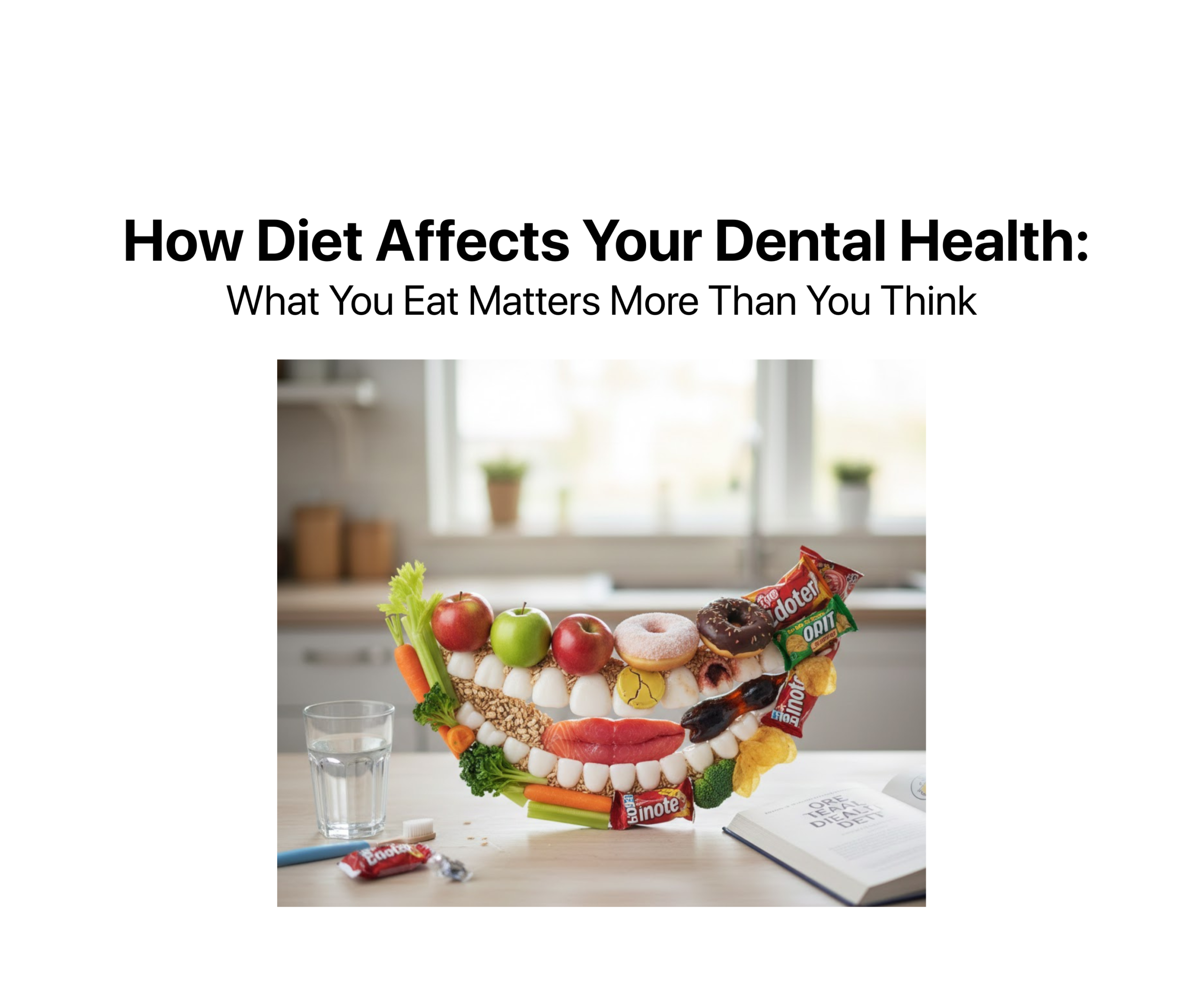
How Diet Affects Your Dental Health: What You Eat Matters More Than You Think
When you think about taking care of your teeth, what’s the first thing that comes to mind? Brushing, flossing, regular check-ups with your dentist, right? While these are indeed vital practices for maintaining a healthy smile, there’s one important factor that often goes unnoticed: your diet. What you eat plays a much larger role in your dental health than you might think. The foods you consume can either support your teeth and gums or contribute to a variety of oral health issues, from cavities to gum disease.
Many people don’t realize that your teeth are constantly exposed to the food and beverages you consume. The mouth is a breeding ground for bacteria, and the food you eat feeds these bacteria, leading to the production of acids that can damage tooth enamel and cause decay. But the good news is that by making conscious choices about your diet, you can protect your teeth and maintain a healthy smile.
In this post, we’ll dive deep into the connection between diet and dental health, exploring how various foods and drinks impact your oral hygiene, the best foods for your teeth, and the ones you should limit or avoid. Plus, we’ll share tips on how you can use your diet to maintain optimal oral health. Let’s get started!
Why Does Diet Matter for Your Teeth?
You may wonder, why does diet matter so much for your teeth? Well, it all comes down to the way food interacts with your mouth.
When you eat, especially when consuming sugary, starchy, or acidic foods, the bacteria in your mouth feast on these substances, producing acids that can attack your tooth enamel. This process is what leads to tooth decay and cavities. If left unchecked, it can eventually result in more severe dental problems, such as gum disease and even tooth loss.
Saliva, your body’s natural defense mechanism, helps to neutralize acids and wash away food particles. But certain foods and habits can overwhelm your mouth’s ability to protect itself. That’s why making smart dietary choices is essential to keeping your teeth healthy and strong.
The Power of Saliva: Your Mouth’s Natural Protector
Saliva plays a critical role in your oral health. It’s constantly at work in your mouth, performing several functions that are crucial for dental health. Here’s what saliva does:
-
Neutralizes Acid: After you eat or drink acidic foods, saliva helps to neutralize the acid, reducing the risk of enamel erosion.
-
Washes Away Food Particles: Saliva helps clear away food particles that might be left behind on your teeth.
-
Aids in Remineralization: Saliva contains minerals like calcium and phosphate, which help repair and strengthen your enamel.
-
Fights Germs: Saliva also contains proteins and enzymes that help fight harmful bacteria, preventing plaque buildup.
If you’re not getting enough saliva (such as if you suffer from dry mouth), it’s much easier for bacteria to thrive and lead to cavities and gum disease. This is why staying hydrated and choosing foods that stimulate saliva production is vital for oral health.
Foods That Promote Healthy Teeth
Now that we understand the connection between diet and dental health, let’s take a look at the foods that can actually help protect and strengthen your teeth.
1. Fruits and Vegetables: Nature’s Toothbrushes
Fruits and vegetables, particularly raw ones, are among the best foods for your teeth. Not only are they packed with essential vitamins and minerals, but many of them are also crunchy, which helps to scrub your teeth clean naturally. They also encourage saliva production, which is beneficial for your oral health.
Here are some of the best fruits and vegetables for your dental health:
-
Apples: High in fiber and water content, apples help clean your teeth as you chew. The fibrous texture also stimulates your gums and promotes saliva production.
-
Carrots: The crunchiness of carrots helps to scrub away food particles and plaque from your teeth. Plus, they are packed with vitamin A, which is essential for gum health.
-
Celery: This low-calorie veggie is high in water and fiber, helping to stimulate saliva production and cleanse your teeth. Celery also contains a lot of vitamins that promote overall oral health.
-
Cucumbers: Like celery, cucumbers are made mostly of water, which helps keep your mouth hydrated and flush away food particles. They’re also low in sugar and acids, making them ideal for your teeth.
-
Leafy Greens: Vegetables like spinach and kale are rich in calcium, which is vital for strong teeth and bones. They also contain folic acid, which has been shown to reduce the risk of gum disease.
2. Dairy Products: Strengthen Enamel Naturally
Dairy products like milk, cheese, and yogurt are essential for strong, healthy teeth. These foods are packed with calcium, which is the building block of your teeth and bones. Dairy also contains phosphates, which help to restore minerals to your tooth enamel that may have been lost due to acidic foods or drinks.
Here’s why dairy is good for your teeth:
-
Calcium helps remineralize enamel and supports overall bone health.
-
Phosphates in dairy help maintain a healthy pH balance in the mouth, which helps prevent tooth decay.
-
Casein, a protein found in cheese, actually binds to the surface of your teeth, providing a protective layer and preventing the loss of calcium.
A study published in the Journal of the American Dental Association found that cheese can raise the pH levels in the mouth, making it less acidic, which in turn helps protect against cavities. So, enjoy a slice of cheese after meals for a boost to your oral health!
3. Nuts and Seeds: Nature’s Superfoods
Nuts and seeds may seem like an unlikely choice for dental health, but they’re packed with healthy fats and essential nutrients that support the health of your gums and teeth. They also help scrub your teeth clean as you chew.
Some of the best options for oral health include:
-
Almonds: Rich in calcium and protein, almonds help protect enamel and support overall dental health.
-
Sunflower Seeds: Packed with magnesium and vitamin E, these seeds are great for gum health and help fight oral infections.
-
Walnuts: High in omega-3 fatty acids, walnuts promote healthy gums and help reduce inflammation.
4. Green Tea: A Natural Anti-Bacterial Agent
Green tea is more than just a calming beverage—it’s also an excellent choice for maintaining healthy teeth. Green tea contains polyphenols, which are powerful antioxidants that help reduce the formation of plaque and fight bacteria in the mouth.
Here’s how green tea helps your dental health:
-
Reduces plaque buildup: The polyphenols in green tea prevent harmful bacteria from sticking to your teeth.
-
Fights bad breath: The antibacterial properties of green tea help reduce the growth of odor-causing bacteria.
-
Prevents gum disease: Green tea has been shown to reduce the risk of gum disease by inhibiting the growth of bacteria that cause inflammation.
5. Water: The Best Drink for Your Teeth
It’s no secret that water is essential for hydration, but it’s also incredibly important for your teeth. Water helps wash away food particles, neutralize acids in the mouth, and keep your saliva production at healthy levels.
Here’s why drinking plenty of water is important for your dental health:
-
Flushes away food particles: After eating, water helps rinse your mouth, removing any food particles that may be left behind.
-
Maintains saliva production: Saliva is essential for neutralizing acids and remineralizing enamel, so staying hydrated is crucial for your oral health.
-
Prevents dry mouth: Water helps prevent dry mouth, which can lead to an increase in harmful bacteria and plaque buildup.
Foods That Can Harm Your Teeth
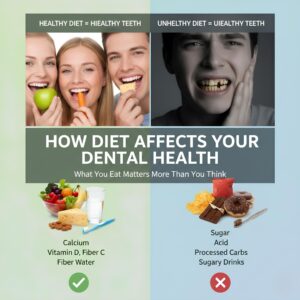
While certain foods can benefit your dental health, others can significantly harm your teeth. These foods often contribute to plaque buildup, tooth decay, and gum disease. Here’s a look at the most common offenders:
1. Sugary Foods and Drinks: The Main Culprit for Cavities
Sugar is one of the worst offenders when it comes to oral health. When you consume sugary foods or drinks, the bacteria in your mouth feed on the sugar and produce acids. These acids then attack your tooth enamel, leading to cavities and decay.
Foods and drinks to limit or avoid include:
-
Soda and sugary beverages: These drinks are high in sugar and acid, making them a double threat to your enamel.
-
Candy and sweets: Hard candies, gummy candies, and chocolate can all contribute to tooth decay.
-
Baked goods: Pastries, cookies, and cakes often contain sugar, flour, and acids that can lead to plaque buildup and cavities.
2. Acidic Foods and Drinks: Eroding Your Enamel
While fruit is healthy, some types of fruit, particularly citrus, are highly acidic. Acidic foods can soften tooth enamel, making it more vulnerable to damage.
Here are some acidic foods and drinks to be mindful of:
-
Citrus fruits (oranges, lemons, grapefruits): While packed with vitamin C, they can erode enamel if consumed in excess.
-
Soda: Even if it’s sugar-free, the acid in soda can still wear down your enamel over time.
-
Wine: Both red and white wine are acidic and can weaken your enamel if consumed frequently.
3. Starchy Foods: The Hidden Culprit
Starchy foods, like chips, pasta, and white bread, can get stuck in your teeth and promote plaque buildup. When these foods break down in your mouth, they turn into sugar, which feeds harmful bacteria and contributes to tooth decay.
4. Alcohol: A Dehydrating Force
Drinking alcohol in moderation is usually fine, but excessive alcohol consumption can lead to dry mouth, which increases your risk of tooth decay and gum disease. Additionally, alcoholic beverages like wine and beer are often acidic and can erode tooth enamel.

Tips for Maintaining Healthy Teeth Through Diet
So, now that you know which foods promote healthy teeth and which ones to avoid, here are some tips to help you maintain optimal oral health through diet:
-
Brush your teeth after meals: Brushing after eating helps remove food particles and prevents plaque buildup.
-
Rinse with water: If you can’t brush after a meal, rinse your mouth with water to wash away food and neutralize acids.
-
Limit snacking: Frequent snacking increases the time food is in contact with your teeth, so limit snacks and stick to healthy options.
-
Chew sugar-free gum: Chewing gum stimulates saliva production, which helps clean your teeth and neutralize acids.
-
Choose whole foods: Whole fruits, vegetables, and whole grains are not only good for your body but also support oral health.
Conclusion
Your diet plays a pivotal role in your overall dental health. By making conscious choices about the foods and drinks you consume, you can protect your teeth from cavities, gum disease, and other oral health issues. Remember, what you eat has a direct impact on your smile!
For the best results, make sure you combine a balanced diet with regular brushing, flossing, and dental check-ups. If you need personalized advice on how diet can impact your dental health, don’t hesitate to reach out to us at [Your Dental Practice Name]. We’re here to help you achieve and maintain a beautiful, healthy smile for years to come!